Daily Show has a clip w/ Wyatt Cenac about a Whole Foods boycott. The clips starts with a bunch of talking heads spouting the “Latte drinking, Volvo driving…” line.
| The Daily Show With Jon Stewart | Mon – Thurs 11p / 10c | |||
| Whole Foods Boycott | ||||
|
||||
Daily Show has a clip w/ Wyatt Cenac about a Whole Foods boycott. The clips starts with a bunch of talking heads spouting the “Latte drinking, Volvo driving…” line.
| The Daily Show With Jon Stewart | Mon – Thurs 11p / 10c | |||
| Whole Foods Boycott | ||||
|
||||
 The guys who brought us Freakonomics, a book of counter-intuitive stories of crack dealers who live with their mothers and public school teachers who help their students cheat, are at it again with SuperFreakonomics. This time, however, I think they’re stretching their credibility.
They’ve released a few excerpts from the book, and, while I read their first book, I think I’ll pass on the second. One story that has been courting controversy lately is their assertion that child car seats are no better at protecting kids older than two from death than regular seat belts. Since their data investigation proves inconclusive, they conduct their own safety tests. But they admit, since they’re economists and not safety engineers, they really don’t know what they’re doing.
Their study looks at fatality rates and not injury rates. The US Department of Transportation has been freaking out over the coverage ABC News gave to the book, and weights in here. The DOT cites this press release from the Children’s Hospital of Philadelphia:
PHILADELPHIA, Oct. 19 /PRNewswire-USNewswire/ — A study released today in Pediatrics by The Children’s Hospital of Philadelphia offers updated evidence that children ages 4 to 8 who are restrained in the rear seat of a car in a belt-positioning booster seat are 45 percent less likely to be injured in a crash compared with children using a seat belt alone. Furthermore, the study showed there was no difference in the level of protection offered by backless versus high back booster seats. Of those riding in booster seats, children involved in side-impact crashes saw the greatest reduction in injury risk.
Superfreak also covers the economics of prostitution, but, while it’s an interesting topic, it’s not really in line with this blog. Sady Doyle writes an excellent critique of this chapter in the Guardian, followed by Amanda Hess in the Washington City Paper.
The most ridiculous assertion coming out from Dubnerlevitt is that if you’re drunk, you’re better off driving home than walking. They come to this conclusion by using a convoluted analysis of how many miles the average american walks, how many drunk pedestrian fatalities there are each year and compare those numbers to drunk driving fatalities.
Ezra Klein at the Washington Post dissects the analysis:
The next few pages purport to prove that drunk walking is eight times more dangerous than drunk driving. Here’s how they do it: Surveys show that one out of every 140 miles driven is driven drunk. “There are some 237 million Americans sixteen and older; all told, that’s 43 billion miles walked each year by people of driving age. If we assume that 1 out of every 140 of those miles are walked drunk — the same proportion of miles that are driven drunk — then 307 million miles are walked drunk each year.”
“If we assume.”
But why should we assume that? As the initial example demonstrates, a lot of people walk drunk when they would otherwise drive drunk. That substitution alone suggests that a higher proportion of walking miles are drunk miles. Other people walk, or take transit, when they know they’ll be drinking later. That’s why they’re walking and not driving. That skews the numbers and makes it impossible to simply “assume” parity.
In passing the Freakonomics guys mention that drunk walkers aren’t likely to hurt or kill others, unlike drunk drivers. However, factoring in passenger, pedestrian and other driver fatalities brings them to the conclusion that “walking drunk leads to five times as many deaths per mile as driving drunk.” I’d guess that someone who is walking drunk isn’t covering nearly the amount of miles as a driver. As a matter of fact, I’d wager than many of those walking deaths happen within the first mile. And Ezra Klein points out that the walkers are probably in tightly packed urban areas, which are more dangerous to drunk pedestrians than the suburban and rural areas that are more frequented by drunk drivers. These consideration would skew their data further.
Their conclusion is just irresponsible: “So as you leave your friend’s party, the decision should be clear: driving is safer than walking” Yes, they mention you can take a cab, or drink less. But I can comment from personal experience; the best decision is to fold down the rear seats of your station wagon, crack open a window and sleep in the back.
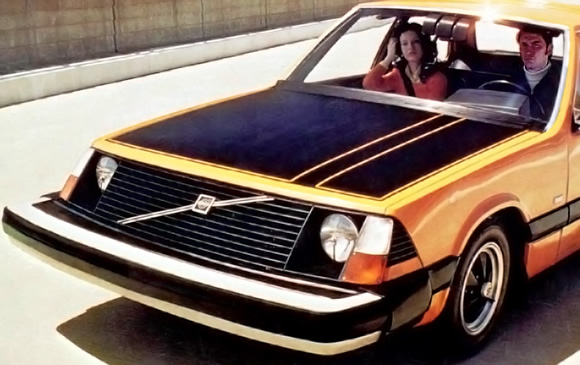 The frowning driver in this photo must be seething that he has to model with such a fugly car. But what this Volvo Experimental Safety Car (VESC) lacks in looks, it makes up for in driver protection.
The idle problem I was having got so bad that when I tried to start the brick yesterday it just stalled. I could rev the engine, but once I let off the gas it would shudder and quit. I did a deeper analysis under the hood. I pulled the new flame trap off, checked and tightened it on, checked the air filter, checked the hoses and everything seemed ok. There was one hose that seemed loose though. It was attached to this white and black plastic cylinder:
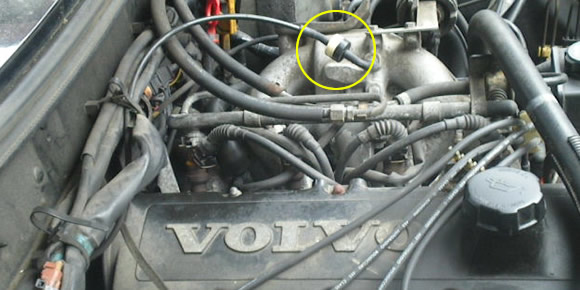
I’ve been researching and haven’t been able to figure out what this thing does. I pulled and reattached the hose, wrapped it in duct tape and fired up the engine. No stall. I drove all day today and had no idle problems at all. It seems the problem had to do with air intake/vacuum leaks, but I can’t tell if it’s because of this part, or somewhere else along the line. Whatever. Runs strong now.
Over the years since I bought the Brick I’ve become more and more sensitive to the odd noise from the hood or strange feel from the gas pedal. I don’t always act on these things, but at least I’m becoming more aware of the quirks and problems before they get much bigger.
Right now I’ve got some weird idle issues. A couple times its idled high, a couple times it’s idled low enough that it threatened to stall. I know I have an oil leak somewhere in the front of the block, but it’s not draining too much oil. Maybe 1/2 a quart a month. I’m wondering though if that oil is draining into the timing belt. The belts squeal when it’s cold.
Or do I have an air intake/ vacuum problem? The trouble shooting guides point to the air mass meter, air filter, throttle body, etc. As I have a clean throttle body and a new air filter I wonder if there’s a leak somewhere in the line, or if I need a new AMM. Whatever it is, it’s another, new issue after just finishing the tranny problems. What a PITA.
UPDATE: After digging around under the hood, everything is back to normal.
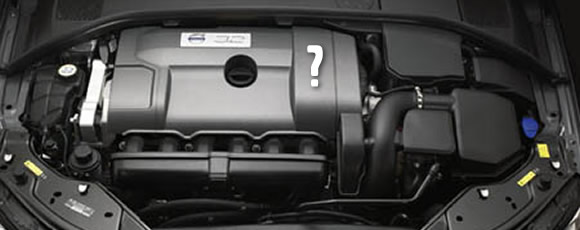
Seeing as I drive a 17 yo POS, I have no idea what the experience of getting a new car repaired is. Apparently many car companies demand that drivers only get their cars fixed through them. They do this by using computer codes that lock the mechanics of the car to anyone other than the dealer. This hinders the ability of smaller mechanics to make a living or provide alternate diagnosis. Ultimately it limits owners from having control over their own cars. What a scam.
From the Right to Repair site:
The need for Right to Repair legislation has become a necessity in order to protect the rights of car owners to decide where and how they have their vehicles serviced, whether at a new car dealer or an independent service facility. Right to Repair ensures that the person who bought the car and not the car company, can decide where that vehicle is repaired and maintained.
You can support the Right to Repair legislation by contacting congress here: http://capwiz.com/righttorepair/home/
After seeing this video, I have no idea how anyone survived driving in the 1960s. When you combine ridiculous amounts of power with minimal seat belts, no child safety seats and inadequate chassis rigidity, it’s no wonder accident survival rates were so low.
I love my headrest!
Via How We Drive.
In the ongoing saga of my transmission shifter, I discovered the retaining ring I installed isn’t the right fix. It snapped off at some point, and I was left back where I started. Actually, it was worse, because I had to shut the car off while it was sticking 1/2 way into the street with no ability to get out of gear. While I biked to the hardware store my wife had to deal with a local cop, who demanded the car be moved off the street. I got back and quickly put on a new clip, only to have that one pop off 5 minutes later.
Obviously the retaining clip doesn’t work so I posted an inquiry on the Brick Board. Art Benstein posted some great pics and it was explained to me that I either needed to weld the end of the rod adjuster to a washer, or flare the end around a tight fitting washer. I chose the later and here’s the result.
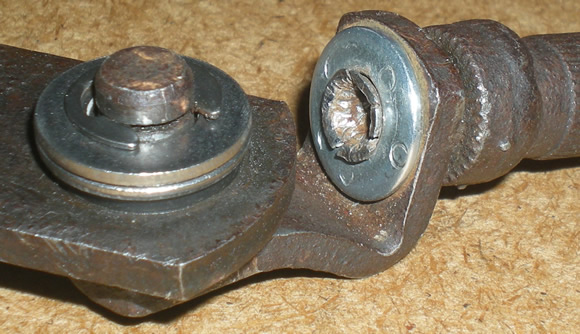
I’m hoping that this fix, plus new bushings for the shift levers and a new transmission mount, will solve the shifting problems. Because I don’t need to be stuck in reverse in a parking lot with no way to park.
Guess this is what they do for fun in Norway.
I’m currently reading Matthew Crawford’s great book “Shop Class as Soulcraft: An Inquiry Into the Value of Work”
It’s been eye-opening for me to discover the joy of diagnosing and fixing my car. While budget considerations guided the purchase and maintenence of my 240, the satisfaction of repairing and enhancing the 17 year old vehicle make it more than just transportation. There’s a connection that comes from listening, feeling and problem solving that just isn’t there when the car becomes a mysterious appliance that can only be serviced by professionals.
Crawford speaks of the frustration of a car owner who brings his vehicle to the dealer for a repair and is informed that it just isn’t worth fixing. He’s unable to get to the nitty-gritty of the situation, because he’s being informed of the problem not by the mechanic, but by a “service representative”, another step of removal from the reality of the car’s problems. Crawford goes on to lament the feelings of impotence that arise from our inability to understand the workings of our machines, all in the name of the supposed freedom from worrying about how these machines work.
He brings up a great example of a Mercedes that doesn’t have a dipstick. Instead, when the car is low on oil a message appears on-screen: “Service Required”. While the car still has the basic, mechanical need of engine lubrication, the owner is divorced from this reality, and the simple process of adding oil becomes a trip to the corporate dealer to repair a mysterious ailment.
You can see an interview Matthew Crawford did on the Colbert Report, but you can get a better sense of his work by reading his feature in the New York Times Magazine.