Monthly Archives: February 2011

Nicolas Cage: Driving Angy Beige Volvos?

Here’s the latest action flick from Nic Cage, “Drive Angry“.  He rips around in some late 60’s muscle cars, which is the height of originality. It’s like Cage wants to out-cool Kurt Russel in “Death Proof“, but just looks like a dude cranking his stick shift with a nubile Daisy Duke.

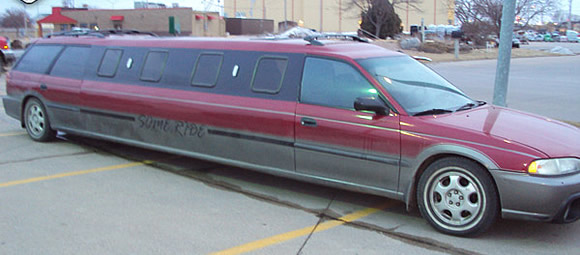
But it wasn’t always Chargers and Mustangs for Nicolas Cage. In the 90’s he drove Volvos in three different movies, forming the “Beige Volvo Trilogy.” Find out more, after the jump.

Continue reading

“Automotive Darwinism” Killed the Wagon?

Volvo announced in January that they will discontinue the V50 in the US. In writing about the death of the last Volvo station wagon, CNN Money’s Alex Taylor III posted an odd article reminiscing about his youth in the suburbs of the 1950s while positing that the death of wagons in the US was pretty much inevitable.

His description of the wagons of the 1960s seems to place all of the problems with American cars on the shoulders of station wagons:

American buyers first turned away from station wagons during the 1973 oil crisis. Their extreme length, emphasized by long rear overhangs to accommodate a third seat, made them natural targets.

Sorry, but almost all American cars were lengthy and heavy boats back then, not just wagons. There is nothing intrinsic to the wagon platform that says it needs to be the length of an aircraft carrier. That’s just what Detroit was making at the time.

He then speaks of the rise of the SUV as if it was a rational change for American buyers, while completely overlooking the fact that they have the same problems of poor fuel economy and extreme length that the cars of the 60’s did. He claims that they are “far more utilitarian” than wagons and offered “a lot more cargo space.”

There are many, often irrational, reasons Americans moved to SUVs, but the idea that wagons have less utility is ridiculous. I’ve got more space in the back of my brick than my buddy has in his Nissan Pathfinder. Yes, SUVs have 4-wheel drive, but that only contributes to their poor gas mileage and most drivers don’t need it anyway. AWD anyone?

As for Volvo, he sees their reputation for reliability as a problem, rather than a benefit:

Volvo probably did itself a disservice by running testimonials from owners who drove their Volvos for years and years. When you put a million miles or more on a car, it limits the opportunity for repeat business.

Yes, automakers shouldn’t tout longevity as an asset. They should just make cars that fall apart in 6 years so they can sell a new one. That’s what Detroit did, right? We can see how well that did for them.

Why Repair When You Can Replace?

Todays NY Times has an article about the “trend” of people holding on to their cars and appliances longer than usual. They report average length of car ownership is at a record 52 months, or just over 4 years.

It’s funny how people in the US have developed a mindset where it’s considered normal to dispose of things out of boredom, rather than lack of function. The Times interviews a Jaguar driver who had the habit of buying a new car every 2 years. Economic adjustments now have him driving a 1999 Jag into the ground. He says “it’s a question of shifting values” and that he reassesed the need to constantly have new things.

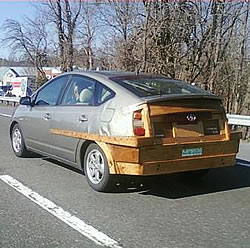
I think it’s sad that the norm is to toss things out that are still functional. Keeping and repairing is seen as an aberration. According to the Times, consumers are “yearning to favor brands, fashion and novelty over practicality.” For many companies, obsolescence and disposability is part of the business model, at the expense of continuity and longevity.

Pic via There, I Fixed It

WSJ Hearts Station Wagons

The Wall Street Journal’s Jonathan Welsh drives the Caddy CTS-V wagon and looks back fondly on the days when iron ships cruised the streets:

Let’s be honest: The big, V8-powered Oldsmobile Vista Cruisers, Ford Country Squires and Dodge Polara wagons of the 1960s and 1970s were rolling works of art compared with the look-alike “crossovers” that have replaced them on the elementary school drop-off line and on long family road trips.

Drifty Brick

With my lower ground clearance I’m finding that little patches of snow between ruts on the road are scraping the underside of my brick. Parallel parking is a particular challenge, as I just jam it into reverse and plow over snow drifts until I can’t move anymore. The snow I drove into last night had been deep enough to slightly elevate the chassis and gave the rear wheels even worse traction than usual. I had to rock back and forth about 5 minutes before breaking free.

Driving around town is fun tho. Not as exhilarating as the rubber-burning brick seen above, but as much fun as you can have w/ RWD, no traction control, tight streets and vast sheets of ice.

Beater Review: The 240 Series


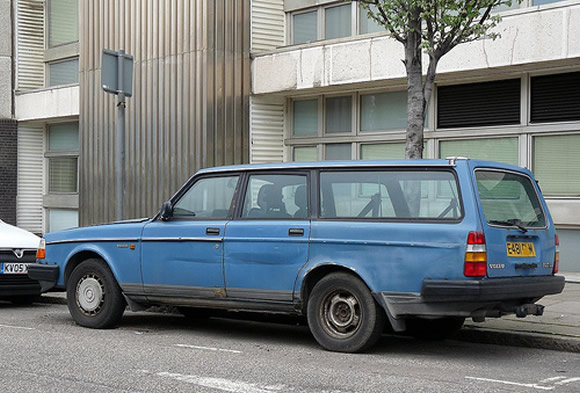
This column from Beater Review in 2007 contains my favorite description of the Volvo 240:

Ask any child to draw “a car,” and chances are you’ll get an uncanny representation of the Volvo 240.

The review is pretty good, as it covers the known issues of failing electrical parts (apparently made from eco-friendly bio-degradable materials) and the heater blower. Good comment below the article also.

On doing a Google search for “beater brick” to find the above image, I saw I have the dubious distinction of being in slots #1 and #2 for that term. Here’s hoping I can nail a three-peat with this post.

Image via Andrew on Flickr